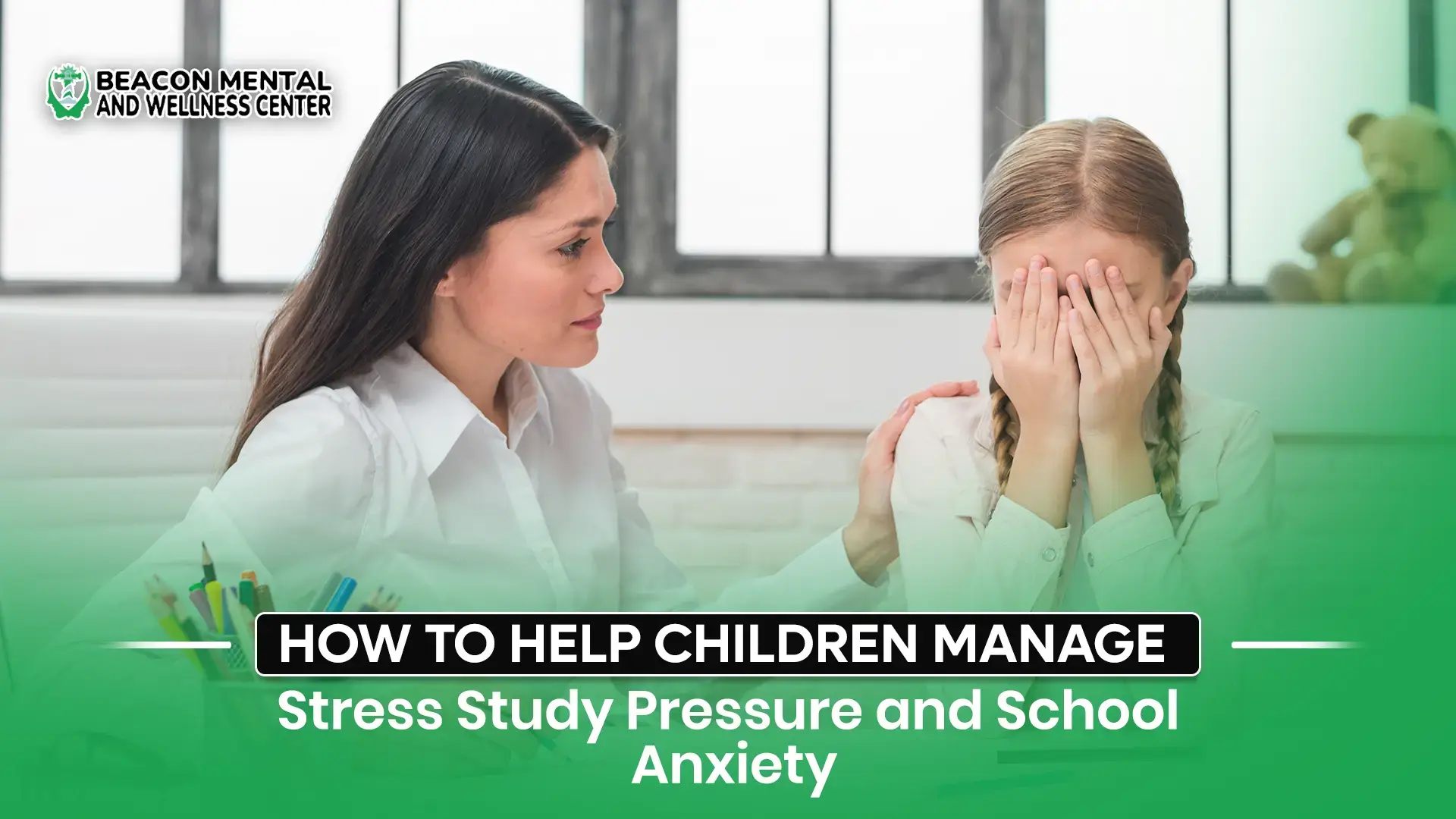
The stress that children can be exposed to in school and during examinations could damage their concentration and sleep and lead to such conditions such as anxiety disorder that will influence the psychological condition of the children. Knowing these stresses will enable the parents to cope with these issues and the teachers can also have a significant role to play in assisting the students emotionally.
The early management of stress is decisive while thinking about the development of good health. It has been revealed that the persistence of anxiety in childhood may be the cause of learning disorders and behavioral difficulties. Parents can be able to contribute to the achievement of their children in education and social life by finding and controlling stress. This blog will try to explore how to reduce study stress in kids and how parents can create schedules to reduce study stress in kids.
Understanding Stress and Anxiety in Children
Maintaining awareness and concentration of stress and anxiety in childhood will make them understand why they are nervous, assist in identifying the signs of their anxiety, and distinguish what to do to cope with their feelings or state of mind. Parents will be better informed about how to explain stress to a child and how to help a child with stress and anxiety successfully through child and adolescent therapy.
What Is Stress
Stress and anxiety are the feelings or emotions of fear, restlessness, or concern that may be felt by a child in their school, family environment, or social communications. Stress can be either temporary or longstanding, affecting their mood, emphasis, and actions; consequently, parents must pay close consideration to stress.
Studies shown by the CDC point out that schools have an imperative part to play in promoting mental wellness among the youth. This can be done through numerous approaches, such as the formation of a safe environment for the children, certifying they find a place where they can relate with adults, and providing them with assistance on mental wellness within schools. Using real practices provided by the CDC Action Guide, the influence of stress can be curtailed.
Common Causes
Children are under a lot of pressure in terms of excessive school work, examinations, peer pressure or societal pressure. Alterations in routine, unfamiliar surroundings and great parental anticipations may also augment apprehension and they will find it more difficult to unwind, focus and appreciate learning and social interrelations.
Normal vs. Chronic
The normal form of stress is conditional; it is positive because it enables the kids to respond to challenges in their life, such as competition or examination. Prolonged forms of stress last for longer periods in which the mind and body of an individual become overstressed in a negative manner, resulting in exhaustion and fatigue, irritability, sleep disturbances, and psychological distress.
Recognizing Signs of Stress in Children
Identification of emotional, behavioral, and physiological symptoms and signs will allow parents to support their children before it starts to influence their daily life.
Behavioral Signs
Stressed children may behave in an atypical manner. They may get straightforwardly annoyed, detach themselves, drop out of activities or friends, have bad sleep or eat less. The behavioral changes that are detected can be used by parents to perceive stress at an earlier stage and support the child before it affects social or school life.
Emotional Signs
The emotional stress may manifest itself through sudden mood swings, constant worry or feelings of incompetence. Children can be sad, anxious, or reluctant to attempt new activities. These feelings can be identified and parents can address anxiety at an early stage and educate them on coping skills to maintain a better emotional balance.
Silent Signs
Other children do not express stress directly, but they express it physically. The warning symbols may be recurring headaches, stomach pain, or sidestepping school. These are the minor signs that parents should pay attention to, talk about sentiments, and make the surrounding environment positive to curtail the underlying stress.
Observation Tips
It is possible to keep an everyday journal of behavior, emotions, and physical complaints and monitor the patterns of stress. Parents are anticipated to engage commonly with the teachers and caregivers, pose soft questions, and support children to share their excitement or emotions. Regular monitoring delivers a way of early intervention and improves emotional resilience.
Incorporating family counseling can further support parents in understanding how to help a child with stress and anxiety, detect silent signs your child is stressed, and learn how to reduce school stress professionally. Regular monitoring delivers a way of early intervention and improves emotional resilience.
Family therapy sessions can also be very beneficial in helping parents understand how to help a child with stress and anxiety to cope with it, recognize the silent signs of stress in a child, and teach children how to deal with school-related stress issues.
How to Explain Stress to Your Child
An appropriate explanation of stress and anxiety in childhood should be clear and age suitable. Parents are supposed to make children realize the pressure of studying, stress at school and the normal emotional response. Feelings can be regulated and coping strategies taught in a practical way; such as deep breathing or short breaks to help children manage stress and anxiety better and enhance their concentration and emotional strength.
Strategies to Reduce Study and School Stress
The practical approaches assist children in dealing with study stress in children, school stress and anxiety.
Organizational Skills
Organizational skills teaching can be used to control stress of studying in kids and school anxiety. Well-organized time, checklists, and small and easy steps lessen the feeling of being overcome, upsurge focus, and further learning. Monitoring progress, providing guidance, and supporting positive study behaviors can reduce the complete stress and anxiety levels in students, as well as discouraging negative ones.
Time Management
Time management assists children to deal with study stress and pressure among children. Peering time to complete homework, play, and rest reduces anxiety and enhances well-being. Training children to emphasize on priorities and routines minimizes the stress of school and inspires a lifetime of coping mechanisms. Participation and encouragement of students’ playtime helps reduce study stress in kids.
Study Techniques
Learning the accurate approaches of studying relieves study pressure on kids. Spaced practice, note summarization and active learning avoid excessive stress. The prevention of cramming increases self-confidence, decreases school pressure, and alleviates stress and anxiety in childhood, which improves academic performance and demonstrative stability.
Parental Support
Stress reduction in children is essential with parental assistance. Motivation, realistic ambitions, and open communication should enable children to deal with study pressure and school stress. Involvement and participation will give parents the ability to help their stressed and apprehensive children develop resiliency and self-assurance. Teaching effective study approaches reduces study stress in kids consistently and constantly.
Coping Techniques for Anxiety
Suitable coping skills empower children to overcome stress among children, study pressure and school nervousness.
Mindfulness Exercises for Kids
Mindfulness enables children to be conscious of their emotions and decreases stress among children. Even basic practices such as guided breathing, body scans, or mindful observation can enable the children to handle study pressure on the part of kids and school stress, enhance focus and emotional control. Understanding stress or anxiety; its signs and differences can be helpful to identify when mental health counseling can support sensitive well-being and retrieval professionally.
Fun Physical Activity
Physical exercise such as sports, dancing or outdoor playing can enable children to relieve tension. Exercise also minimizes school stress and stress and anxiety among students, enhances mood, concentration, and general health, and is, therefore, an important coping strategy against stress among children.
Creative Outlets
Instilling the use of creative activities like drawing, journaling or music in children offers an emotional release. The practices relieve study pressures among children, school anxiety and enable children to vent and cope with stress and anxiety throughout childhood. Positive reinforcement supports and helps confidence and reduces study stress in kids.
Relaxation Methods
Relaxation skills such as deep breathing, directed imagery or advanced muscle relaxation can be taught to children to support in studying and stress in children. This preparation helps to release tension, enhance concentration, and decrease stress in school, which leads to emotional stability and resilience.
When to Seek Professional Help
Children who are stressed can develop persistent irritability, sleeping difficulties, worry and withdrawal of school and activities. It is imperative to know when kids are under a lot of study pressure or school stress and therefore a parent can interfere before stress can essentially play a negative role in academic performance or emotional stability.
It can be recommended to consult child psychologists, counselors, or pediatricians to deal with stress and anxiety during childhood. Moreover, the support groups and schools offer actual techniques to kids and school anxiety to deal with stress in their studies and develop flexibility.
Building a Supportive Environment
A conducive home environment assists children to cope with stress in children and school stress. Open dialogue will help children share concerns about pressure to study or worry and anxiety in childhood and promote emotional awareness and parent-child bonds.
Positive reinforcement rather than punishment can be used to alleviate stress in children studying and anxiety in school. Including problem-solving and resilience training empowers children to tackle difficulties with confidence, stress management therapy services for children, and coping with study pressures among kids, leading to long-term emotional and academic prosperity.
Beacon Mental Center Help Children Stress Management
Beacon Mental Center assists children through professional advice to deal with stress among children, school stress, and study pressure among children. Specialists help children develop emotional resilience, reduce anxiety levels, and develop appropriate coping skills to cope with anxiety, stress, and worries during childhood via counseling and therapeutic sessions.
FAQs
How to reduce study stress in kids?
Make schedules, promote breaks and employ productive study strategies to decrease study stress in children.
How to explain stress to a child?
Keep it simple, use examples and display to children that stress and anxiety feelings are natural at times.
How to assist a child with stress and anxiety?
Care, listen, and instruct about coping mechanisms to deal with pressure and anxiety in childhood.
What are silent signs your child is worried?
Quiet symptoms of your stressed child might include mood swings, headaches, withdrawal or sleeplessness.
How to handle study pressure for kids?
Promote time management, achievable goals and balance to manage study pressure in children.